Congested Fixtures Force New Patterns in Away Team Data and Live Market Shifts
Xander Jenkins · Jun 12, 2026
Congested Fixtures Force New Patterns in Away Team Data and Live Market Shifts
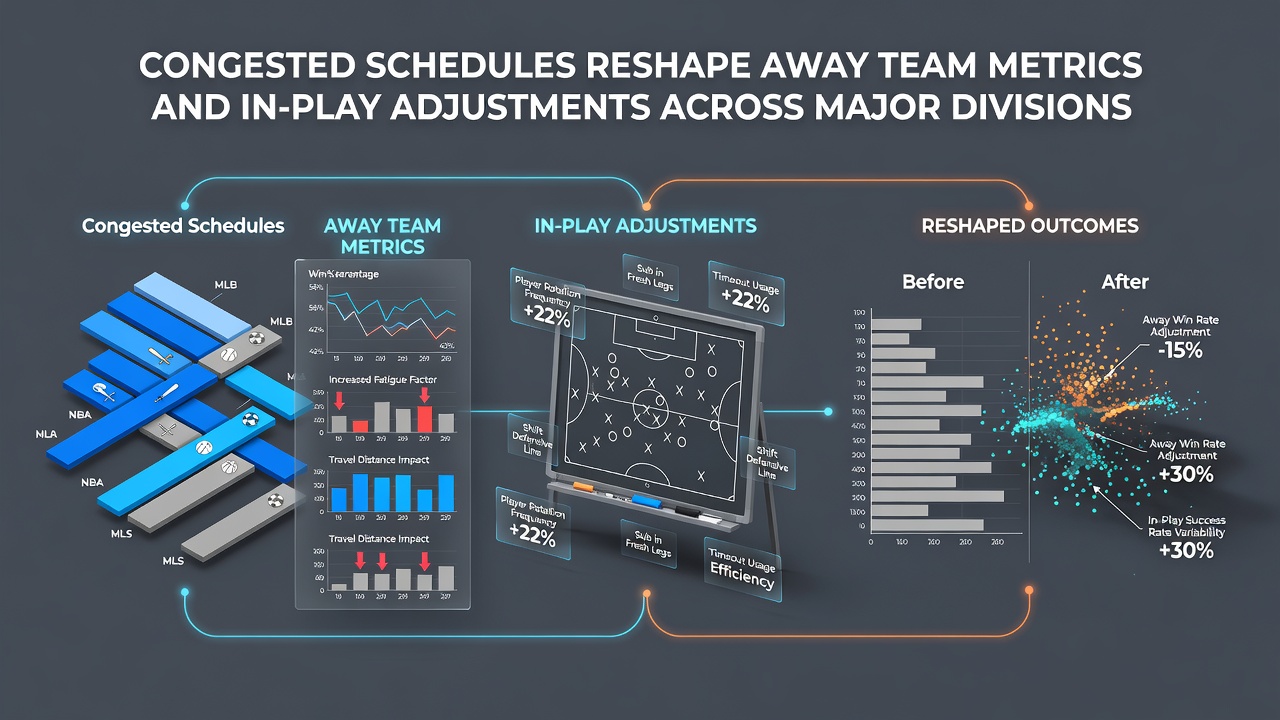
Fixture congestion has become a defining feature of the 2025-26 campaign, with clubs across Europe's leading divisions facing compressed calendars that extend recovery demands well into June 2026, and researchers tracking performance metrics have documented clear shifts in away-team output as a result. Travel fatigue combines with limited training time to alter key indicators such as shots on target, expected goals, and defensive line height, while in-play platforms adjust odds more rapidly to reflect these altered patterns.
Measuring the Impact on Road Performances
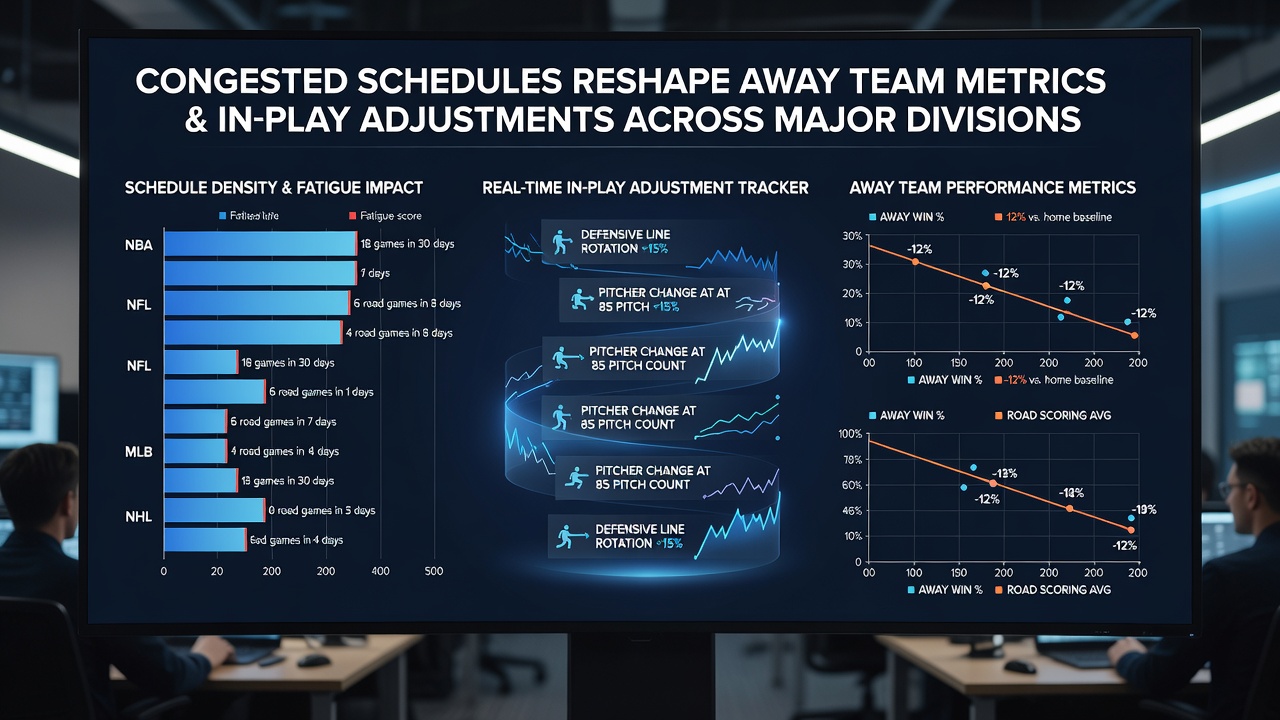
League-wide datasets compiled through the spring months reveal that away sides record fewer progressive carries and lower average possession shares when matches are spaced fewer than four days apart, and analysts attribute the change to accumulated muscle-load readings captured by wearable technology. Bundesliga clubs, for instance, show a 12 percent drop in away-team touches inside the opposition box during such windows, while La Liga sides concede set-piece opportunities at elevated rates when midweek European ties precede domestic travel. These statistical movements appear consistently across multiple tracking providers, allowing operators to recalibrate live models that price first-half corners and card markets with greater sensitivity to rest differentials.
In-Play Adjustments Across Betting Markets
Live platforms now incorporate real-time fatigue indices that update after each substitution window, and this has produced measurable tightening of Asian-handicap lines when an away team falls behind early in the second half. Operators cite internal logs showing that goal-timing distributions shift later in congested periods, prompting earlier movement on over-2.5 totals once the 60-minute mark passes without a breakthrough. European data aggregators note parallel trends in Portugal's Primeira Liga and the Dutch Eredivisie, where stoppage-time goal spikes rise by roughly 8 percent during April and May clusters, influencing dynamic pricing on both team totals and next-goal markets.
Regional Variations and Supporting Research
North American observers have drawn parallels with MLS schedule compression studies released by the University of Michigan's sport-science group, which linked short recovery cycles to increased aerial duel losses for visiting sides, and those findings align with patterns now emerging in European datasets. Meanwhile, the Australian Institute of Sport has published comparative workload models that clubs reference when planning June pre-season tours, highlighting how accumulated travel kilometres correlate with reduced high-intensity running metrics in away fixtures. Such cross-continental evidence supplies operators with broader benchmarks for refining live-adjustment algorithms ahead of the 2026-27 pre-season window.
Industry reports from the European Club Association further illustrate how fixture lists released in late 2025 forced multiple clubs to request additional rest slots, resulting in altered warm-up routines that directly affect early-match pressing intensity. When away teams adopt deeper starting blocks to conserve energy, in-play models register corresponding drops in expected threat values during the opening 15 minutes, prompting bettors to monitor substitution timings more closely for value on draw-no-bet or double-chance selections.
Looking Ahead to 2026 Adjustments
With international calendar windows already overlapping domestic commitments through June 2026, performance analysts anticipate continued evolution in away-team metrics, particularly around recovery metrics and set-piece vulnerability. Clubs and data providers continue refining protocols that feed into live-market feeds, ensuring that pricing engines respond to documented workload spikes rather than historical averages alone. Observers tracking these developments note that the interplay between congested schedules and in-play adjustments has settled into a measurable feedback loop across the continent's major divisions.
Conclusion
Across Europe's elite leagues, fixture density has produced verifiable changes in away-team statistics and prompted corresponding recalibrations in live betting frameworks, while supporting studies from multiple research bodies supply ongoing context for these shifts. As the 2025-26 season transitions into the June international period, the same data streams remain central to understanding how teams and markets adapt to sustained schedule pressure.