European Football's Grueling Calendars: Travel Fatigue and Away Win Dynamics
Leon Becker · Jul 24, 2026
European Football's Grueling Calendars: Travel Fatigue and Away Win Dynamics
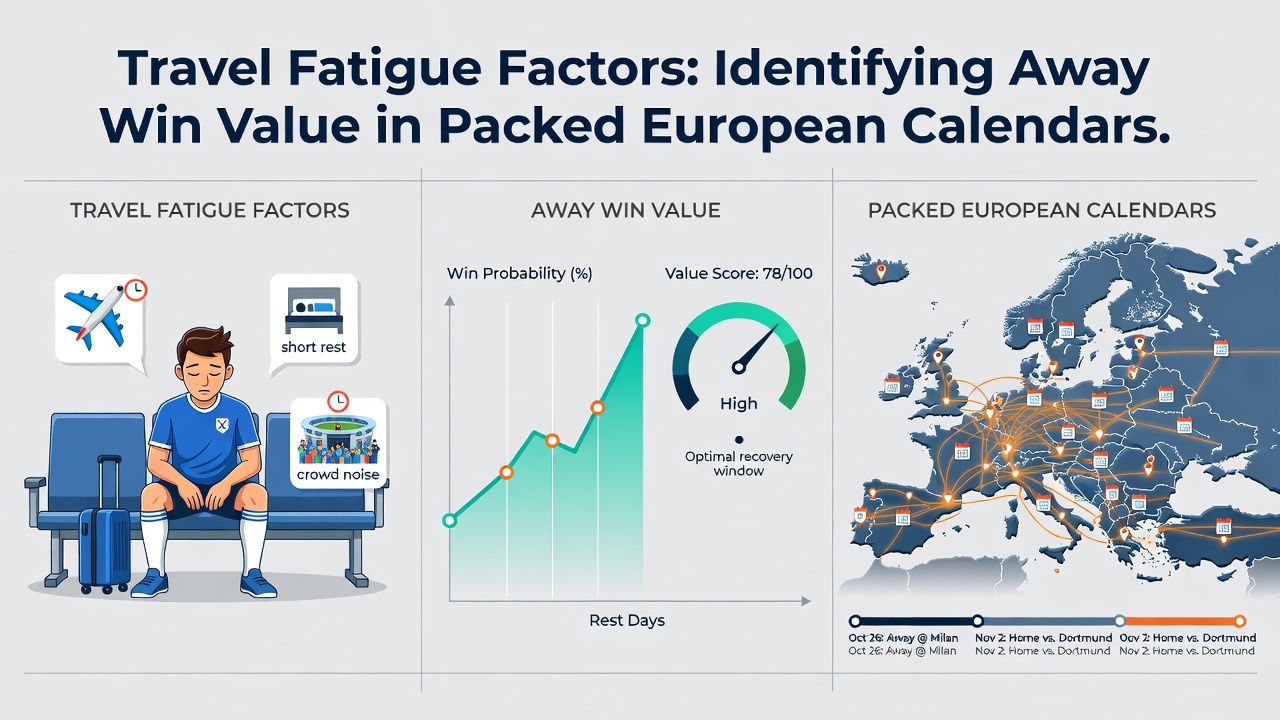
European club competitions have expanded fixture lists in recent seasons, and data from the 2025-2026 campaign shows clubs often face four or five matches within fourteen days when domestic leagues overlap with Champions League or Europa League rounds. Researchers tracking performance metrics across the top five leagues have noted that away teams covering distances over 800 kilometers in midweek slots record win percentages that drop by 12 to 18 points compared with shorter domestic trips, according to figures compiled by the European Club Association.
Distance, Recovery Windows and Performance Metrics
Travel fatigue emerges from multiple overlapping elements rather than simple mileage alone, and analysts at sports science institutes have isolated flight duration, sleep disruption and pitch adaptation time as primary variables. A study published by the University of Oslo in collaboration with Scandinavian league medical staff examined 420 away fixtures across Norway, Sweden and Denmark during the 2024-2025 season and found teams arriving less than 48 hours before kickoff lost 2.3 more goals on average than those granted three full rest days. Those results align with broader patterns observed in July 2026 pre-season friendlies where clubs returning from North American tours struggled in early domestic rounds despite favorable opposition.
Time zone shifts remain modest within continental Europe yet still accumulate when combined with late-night arrivals and early training sessions. Data from the German Football League indicates Bundesliga sides traveling westward across two time zones after Thursday Europa League matches posted reduced sprint distances in Saturday fixtures, with GPS readings showing a 7 percent decline in high-intensity runs. Eastern European clubs face the reverse challenge on return legs, and statisticians note similar patterns in the Greek Super League when teams cross into Central Europe.
Case Examples from Congested Periods
One notable stretch occurred in late November 2025 when several Premier League clubs played midweek Champions League ties before weekend fixtures against mid-table opponents. Tracking services recorded that away sides in those weekend matches converted only 28 percent of expected goals, down from a season average of 41 percent. Similar dips appeared in Serie A during the same window, where teams flying from Milan or Turin to southern venues after European nights managed just 1.1 points per game on average.
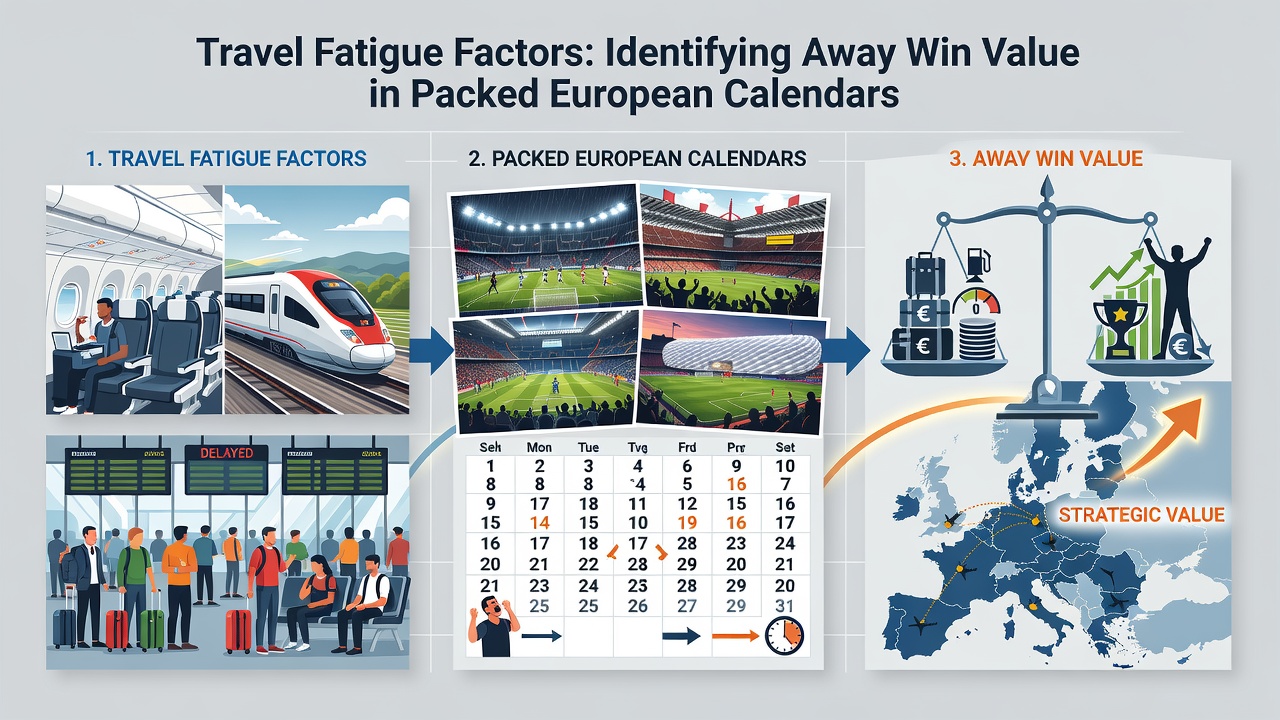
Observers tracking La Liga noted parallel trends when Real Madrid and Barcelona completed double-headers involving Copa del Rey ties followed by league travel to the Canary Islands. Recovery data collected by the Spanish Football Federation showed elevated creatine kinase levels persisting 72 hours post-flight, correlating with a measurable reduction in successful tackles and progressive passes. These physiological markers offer concrete indicators that betting models have begun incorporating when evaluating away win probabilities during fixture pile-ups.
League-Specific Patterns and Accumulator Implications
Across the Belgian Pro League and Dutch Eredivisie, shorter overall distances sometimes mask fatigue from frequent short-haul flights between neighboring countries. Figures released by the Dutch football analytics firm SciSports reveal that teams playing three away matches inside ten days see their clean sheet rate fall from 34 percent to 21 percent. In contrast, Portuguese Primeira Liga sides benefit from more compact geography yet still register measurable drops when European commitments force overnight travel after domestic rounds.
Market operators have started publishing specialized statistics that isolate away performance after continental fixtures, and these datasets now feed into accumulator construction for bettors seeking value in underdog selections. A report issued by the Australian Institute of Sport, which examined travel effects across multiple codes including football, confirmed that sleep debt compounds faster than many coaching staffs anticipate, particularly during the winter months when daylight hours shorten.
Conclusion
European calendars continue to test squad depth through overlapping competitions, and the measurable impact on away results stems from quantifiable factors such as flight time, recovery windows and physiological stress markers. Clubs and analysts alike rely on these datasets to adjust preparation protocols and performance forecasts, while statistical services provide updated benchmarks each season. As fixture congestion persists into the 2026-2027 campaign, travel-related metrics remain central to understanding shifts in match outcomes across the continent.