Fatigue in Packed Calendars Reshaping Accumulator Patterns Across Europe
Leon Becker · Jul 28, 2026
Fatigue in Packed Calendars Reshaping Accumulator Patterns Across Europe
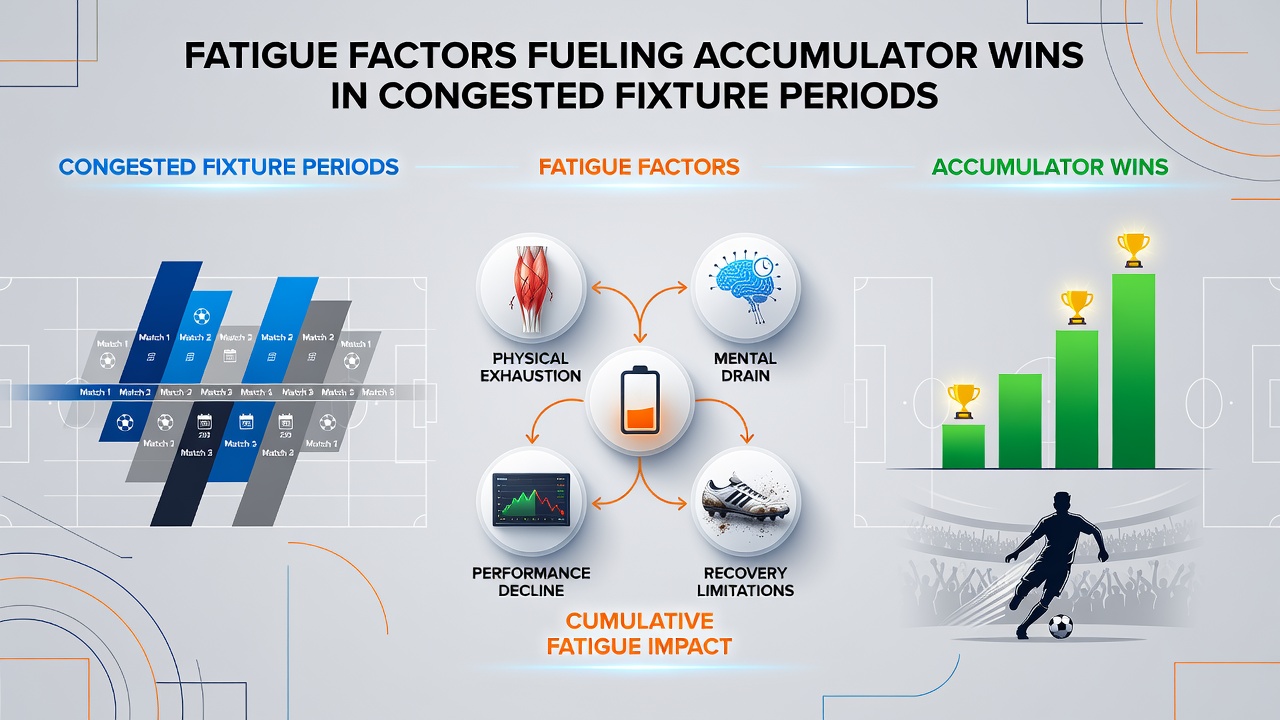
European football calendars have grown denser over the past decade, with top clubs routinely facing three matches in seven days during winter blocks and spring title run-ins, and data from multiple leagues shows measurable drops in high-intensity efforts after such stretches. Researchers tracking GPS metrics across the Premier League, Bundesliga, and Serie A have documented average reductions in sprint distance and acceleration counts when teams play every other day, patterns that align with lower goal tallies in the second halves of those fixtures.
Physiological Markers Behind Performance Drops
Studies from the European College of Sport Science link elevated creatine kinase levels and reduced hamstring strength to consecutive high-load matches, while neuromuscular fatigue compounds when recovery windows shrink below 72 hours. One analysis of Bundesliga data collected between 2022 and 2025 found that teams contesting European midweek ties recorded 12 percent fewer shots on target in domestic fixtures 48 hours later, a trend that continued into July 2026 pre-season preparations where clubs already managing international tournament fatigue faced additional friendlies.
Coaches often rotate squads, yet substitute impact varies by position and prior minutes logged. Midfielders covering the most ground tend to show the sharpest declines in pass completion after back-to-back 90-minute outings, according to figures published in the Journal of Sports Sciences. Defenders, by contrast, preserve tackle success rates longer but commit more fouls once fatigued, opening space that attacking sides struggle to exploit fully because their own forward lines tire at comparable rates.
Betting Market Reactions to Reduced Output
Accumulator builders have increasingly targeted under 2.5 goals and draw selections in congested windows, and bookmakers have adjusted odds accordingly. Historical records from major European leagues indicate that matches scheduled within 72 hours of a prior fixture produce under 2.5 goals outcomes 4.8 percentage points more often than standard three-day rest games. This edge widens when both sides enter the fixture on short rest, a scenario common during December and late April clusters.
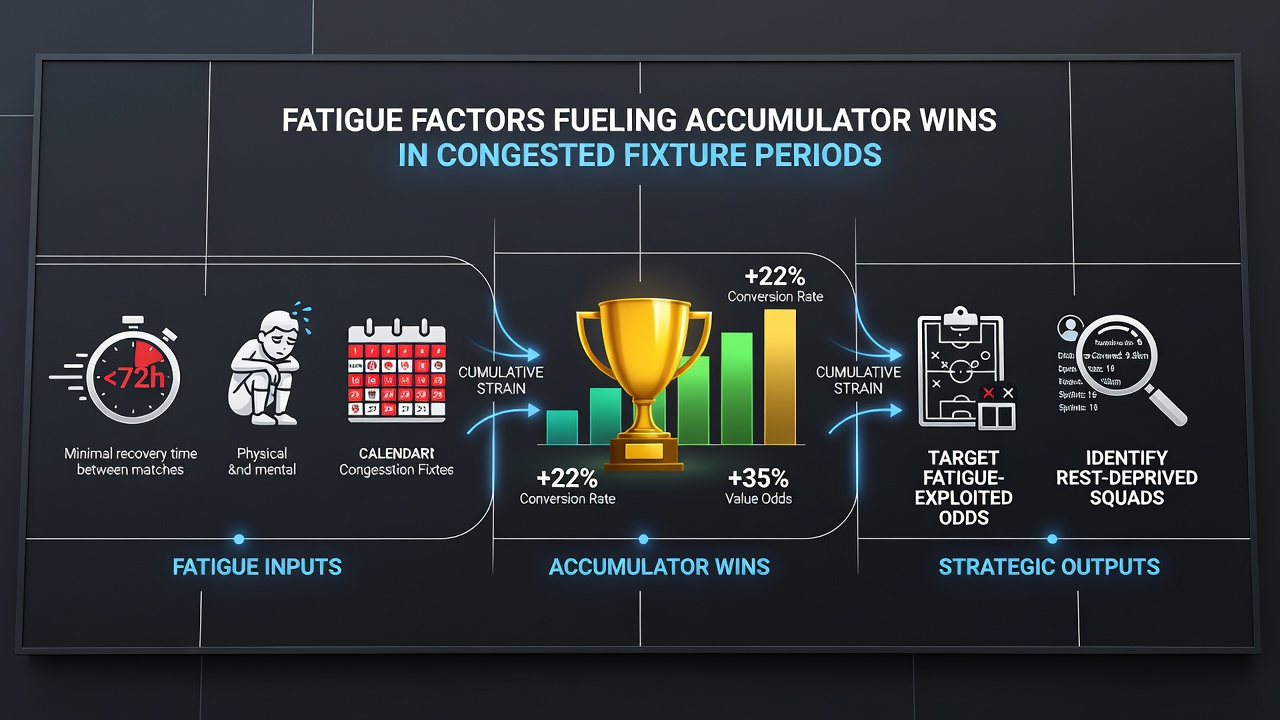
Asian handicap markets also reflect these patterns, with underdog teams on shorter rest frequently covering larger spreads because favourites cannot sustain pressing intensity for full 90 minutes. Data compiled by the German Football League shows that home sides playing a midweek European match win only 38 percent of their subsequent league fixtures, compared with 52 percent when they enjoy four or more rest days. Accumulator constructors combining multiple low-goal or draw legs across parallel leagues have capitalised on these recurring imbalances.
League-Specific Congestion Trends
The Premier League's winter programme regularly features three fixtures inside eight days, while Serie A clubs balancing Coppa Italia ties encounter similar density in February. Ligue 1 and the Eredivisie, with fewer European representatives, still face fixture pile-ups when national team windows overlap domestic rounds. Observers note that the Allsvenskan's summer schedule creates distinct fatigue spikes around the autumn title race, where teams play every third day for stretches of six weeks. Each competition exhibits its own rest-to-performance curve, yet the overarching pattern remains consistent: reduced high-intensity actions correlate with fewer open-play goals and higher draw frequency.
Case examples include a 2024-25 Bundesliga run where one mid-table side contested six matches in 18 days and scored just three times across those games, all from set pieces. Parallel tracking in the Belgian Pro League revealed comparable drops in expected goals when squads rotated minimally. These individual team trajectories feed into broader accumulator models that weight recent fixture density alongside traditional form indicators.
Data Sources Informing Accumulator Construction
Reports from the Australian Institute of Sport on multi-match recovery protocols and UEFA's own injury surveillance studies supply quantitative backing for these observations. Figures released by the Canadian Soccer Association on youth-to-senior transition loads further illustrate how accumulated fatigue compounds across age groups, though senior European datasets remain the primary reference for betting analysis. Cross-referencing these sources allows systematic identification of fixtures where both participants operate under elevated fatigue loads.
Conclusion
Fixture congestion continues to shape match outputs across Europe's top divisions, and accumulator strategies that incorporate rest differentials alongside traditional metrics have aligned with observed trends in goal volume and result distribution. Continued monitoring of GPS, physiological, and performance datasets through July 2026 and beyond will refine these correlations as calendars evolve.