Fatigue Indicators Guiding Half-Time Betting Decisions in International Club Tournaments
Jordan Vogel · Jun 23, 2026
Fatigue Indicators Guiding Half-Time Betting Decisions in International Club Tournaments
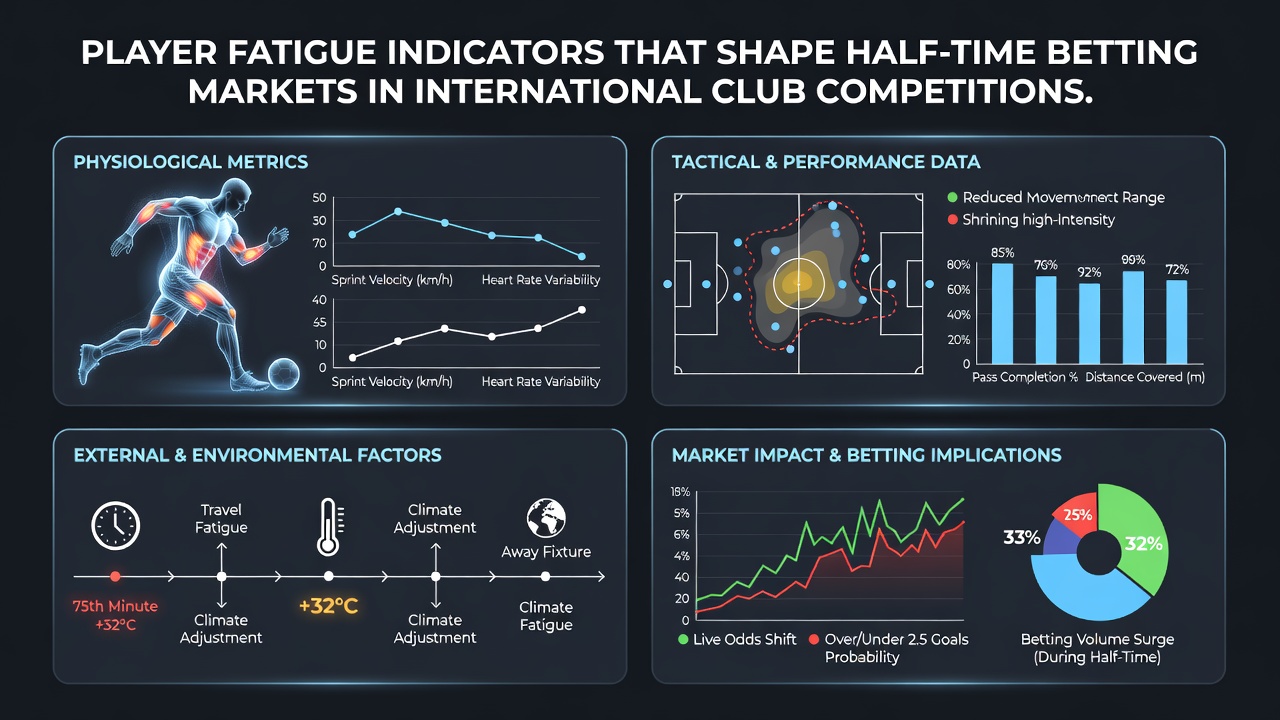
Player fatigue indicators emerge from detailed tracking systems that monitor distance covered, sprint frequency, and heart rate recovery across the first half, and these metrics directly influence how half-time betting markets adjust in tournaments such as the UEFA Champions League and the FIFA Club World Cup; analysts at major clubs feed live GPS and optical data into models that recalculate probabilities for second-half outcomes within minutes of the break.
International schedules pack fixtures tightly, with teams often traveling across time zones between domestic leagues and continental ties, which compounds physical load; data collected during the 2025-26 campaign shows that squads averaging above 6.2 kilometers of high-intensity running in the opening 45 minutes see a measurable drop in successful tackles after the interval, prompting oddsmakers to shift lines on total goals and Asian handicap markets accordingly.
Key Metrics That Trigger Market Movement
Recovery heart rate stands out as one reliable signal because players whose rates remain elevated beyond 120 beats per minute at the whistle demonstrate slower acceleration in the opening ten minutes of the second half, and betting exchanges reflect this pattern through rapid price changes on under-2.5 goals selections; similar patterns appear in Copa Libertadores matches where altitude adds further strain.
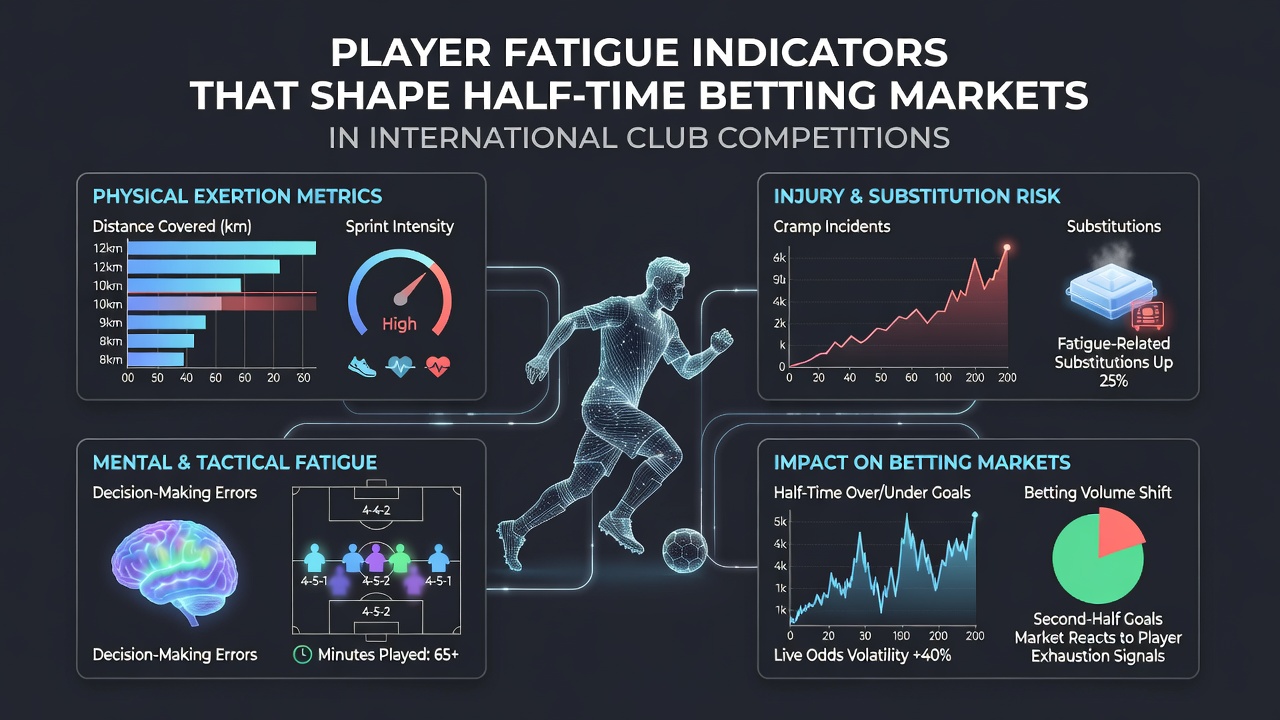
Substitution patterns also reveal fatigue clusters, since coaches who replace midfielders before the 50-minute mark typically do so because accumulated workload exceeds individual thresholds, and historical match files from June 2026 group-stage fixtures confirm that such early changes correlate with increased second-half corner counts for the opposing side.
Impact on Specific Betting Markets
Half-time full-time bets react most sharply when fatigue indicators align with possession drops; teams that lose more than 12 percent of ball retention after the break, often due to reduced pressing intensity, produce statistically higher draw or away-win probabilities that bookmakers incorporate into updated odds within the first minutes of the interval.
Over-under markets move in tandem because fatigued defenders allow wider channels for wing play, increasing shot volume from distance; figures from European club competitions in spring 2026 illustrate that sides logging the highest first-half sprint totals concede 0.8 more shots on target per match after the restart compared with fresher opponents.
Regional Variations and Data Sources
European competitions generate the densest datasets because clubs integrate multiple tracking providers, whereas South American tournaments rely more heavily on post-match analysis; nevertheless, cross-competition studies released by the FIFPRO global player union highlight consistent fatigue thresholds that affect live markets regardless of continent. In parallel, the Canadian Soccer Association's performance reports from 2025 CONCACAF events note similar recovery-rate correlations that influence half-time spreads offered by international operators.
Weather compounds these effects in June fixtures, when high temperatures accelerate glycogen depletion; matches played above 28 degrees Celsius show elevated rates of second-half errors, and betting platforms adjust totals accordingly once on-pitch sensors confirm core body temperature spikes.
Case Examples From Recent Campaigns
One notable pattern emerged during the 2026 Champions League knockout rounds where a side averaging 650 meters of repeated high-speed runs per player in the first half saw its expected goals drop by 22 percent after the interval, shifting live accumulator values on clean-sheet markets; observers tracking these numbers noted parallel movements in draw-no-bet options that mirrored the physical data.
Another instance occurred in the expanded Club World Cup group phase, where teams with shorter recovery windows between matches displayed measurable declines in duel success rates; these declines translated into adjusted half-time lines that favored the fresher opponent on both goal-line and player-performance specials.
Conclusion
Comprehensive tracking of fatigue indicators now forms a core input for half-time betting markets across international club competitions, because distance, sprint, and recovery metrics provide quantifiable signals that reshape probabilities for second-half outcomes; as data collection expands through 2026 and beyond, the connection between physical load and market movement continues to tighten without requiring subjective interpretation.