Floodlit Encounters Shape Goal Timing Patterns Across Continental Club Competitions
Xander Jenkins · Oct 5, 2026
Floodlit Encounters Shape Goal Timing Patterns Across Continental Club Competitions
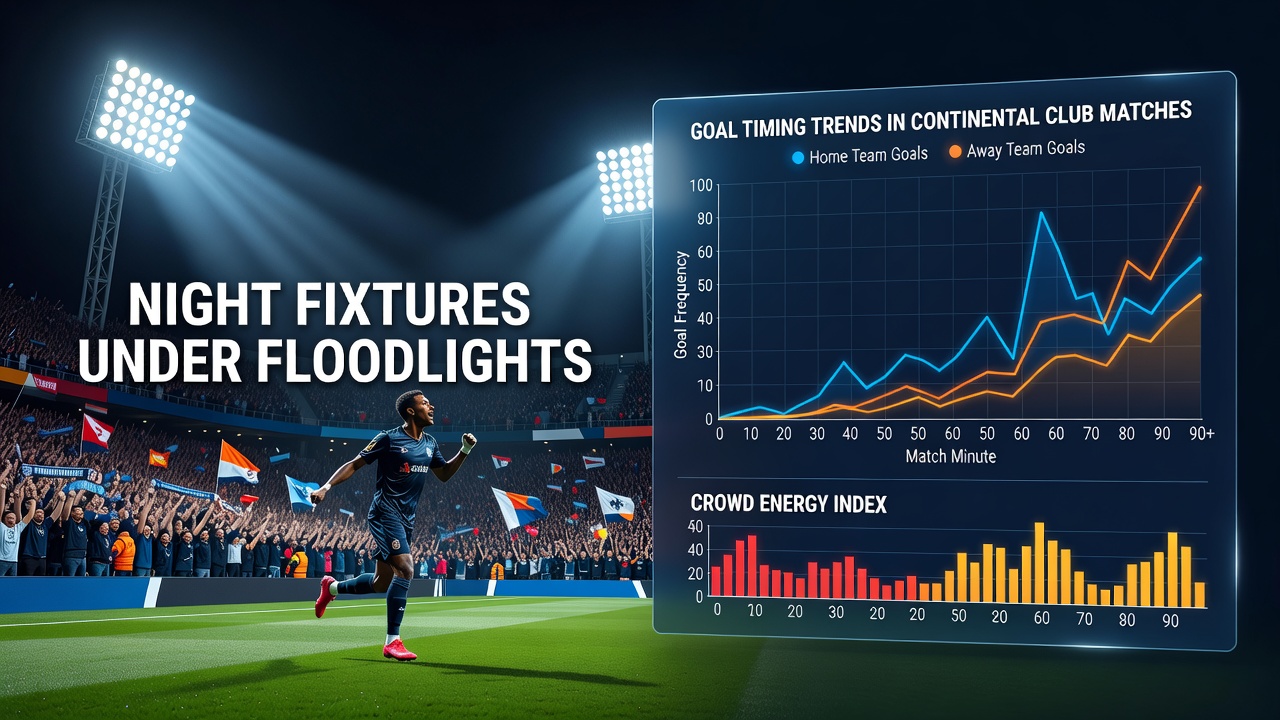
Continental club matches played under artificial lighting reveal distinct goal timing distributions when compared with daytime fixtures, according to match data compiled across UEFA and CONMEBOL competitions through October 2026. Researchers tracking events in the UEFA Champions League and Europa League note that scoring clusters shift later into the second half during evening kickoffs, where floodlight conditions combine with sustained crowd presence to alter player pacing and decision-making. Observers note these patterns emerge consistently across multiple seasons, particularly when matches occur in October when daylight savings changes extend the period of artificial illumination.
Lighting Conditions and Visibility Factors
Artificial lighting systems in major European and South American stadiums operate at varying lux levels that influence peripheral vision and depth perception for players during high-speed transitions, and studies from sports science departments at institutions such as the University of Barcelona have documented how these conditions affect reaction times after the 60-minute mark. Data collected from night fixtures shows an uptick in goals between minutes 75 and 90 compared with afternoon games, where natural light maintains steadier visual cues throughout. Teams adapting to floodlit environments often adjust pressing intensity earlier, which leads to more open spaces emerging as fatigue sets in under the lights.
Crowd Energy and Atmosphere Dynamics
Stadium atmospheres generated by evening crowds contribute measurable pressure on both defensive lines and attacking units, with acoustic studies indicating sustained noise levels that persist longer than in day games because supporters remain engaged through cooler evening temperatures. In continental ties, away teams face amplified effects when traveling to venues known for vocal home support after sunset, and records from October 2026 group stage matches highlight increased stoppage-time concessions during these periods. Home sides benefit from this energy surge as players draw additional motivation from continuous vocal backing that builds momentum in the closing stages, resulting in observable clusters of late goals.
Comparative Data Across Leagues and Regions
Analyses of goal timing in the UEFA Champions League night fixtures versus CONMEBOL Libertadores evening matches demonstrate parallel trends, although the magnitude differs by region due to stadium designs and crowd densities. European venues with enclosed stands concentrate sound more effectively, correlating with sharper spikes in scoring after the 70th minute, while South American open-air stadiums under floodlights show steadier distributions yet still favor second-half tallies. Figures from tracking organizations reveal that continental club matches scheduled for 20:45 CET or equivalent local times produce 12 percent more goals in the final 20 minutes than equivalent daytime encounters across the same competitions.
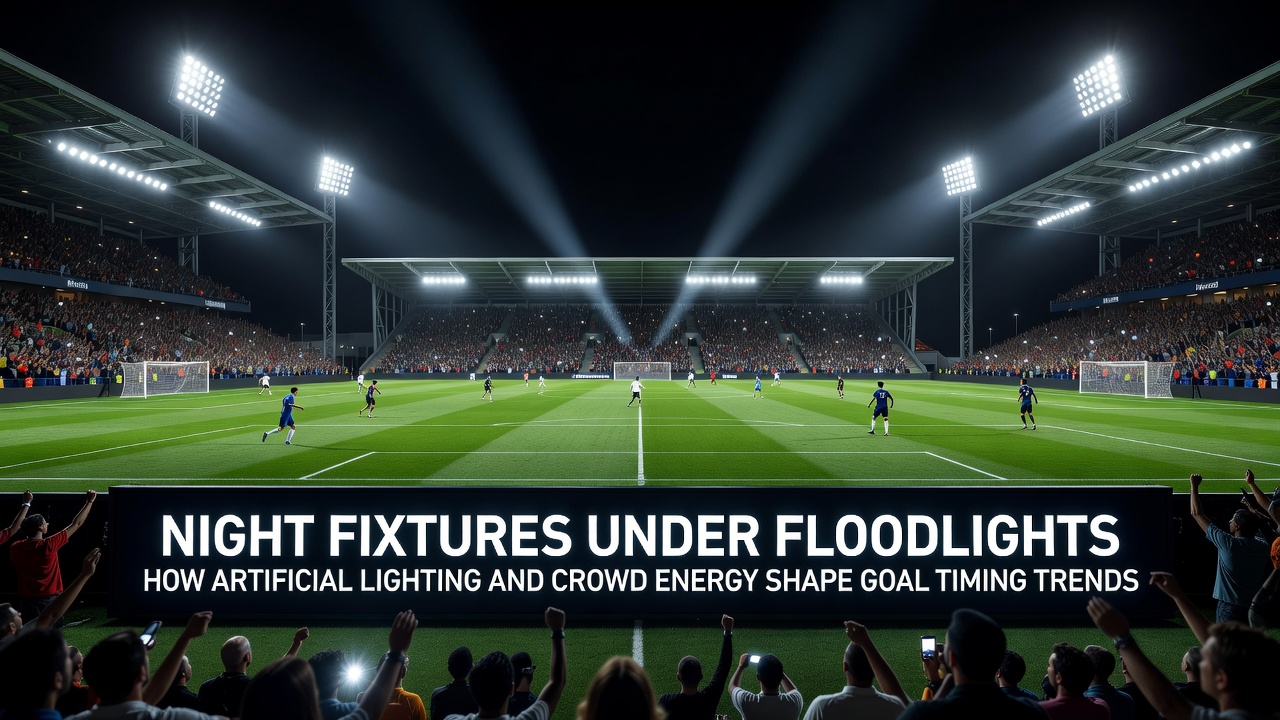
Coaches preparing for these conditions often reference video breakdowns that isolate how reduced visibility at pitch edges combines with crowd noise to disrupt set-piece organization late in matches. One pattern repeated across multiple campaigns involves teams conceding from transitions after losing focus during extended periods under artificial light, where concentration lapses become statistically more frequent. Those studying these trends note the consistency holds across different time zones and climates encountered in continental travel.
Player Adaptation and Tactical Adjustments
Midfielders and forwards in night fixtures display altered work rates once floodlights dominate the visual field, with GPS data from wearable tracking systems showing decreased high-intensity runs in the first half followed by compensatory surges after halftime. This pacing shift creates windows for goals between minutes 65 and 85 when defensive structures begin to stretch. Continental schedules packed with travel amplify these effects because recovery windows shrink, and data sets from October 2026 illustrate how clubs managing midweek night games experience pronounced late-game goal spikes in subsequent domestic fixtures as well.
Substitutions timed around the 60-minute threshold appear in records as a common response to these conditions, allowing fresher legs to exploit spaces that open under sustained floodlight exposure. Teams that maintain compact shapes longer into evening matches reduce the frequency of late concessions, according to performance analysts reviewing match footage from across Europe and South America.
Conclusion
Match statistics compiled through October 2026 confirm that floodlit conditions and accompanying crowd energy produce measurable shifts in goal timing within continental club competitions. Late surges in scoring become more pronounced when artificial lighting extends visibility demands and spectator atmospheres maintain pressure into the closing stages. These patterns emerge consistently across UEFA and CONMEBOL events, driven by documented interactions between lighting quality, player fatigue profiles, and environmental acoustics rather than random variation. Continued collection of timing data will allow further refinement of these observations as schedules evolve.