Measuring Recovery Edges: Fixture Congestion's Role in Multi-Competition Betting Markets
Zara Ludwig · Jul 12, 2026
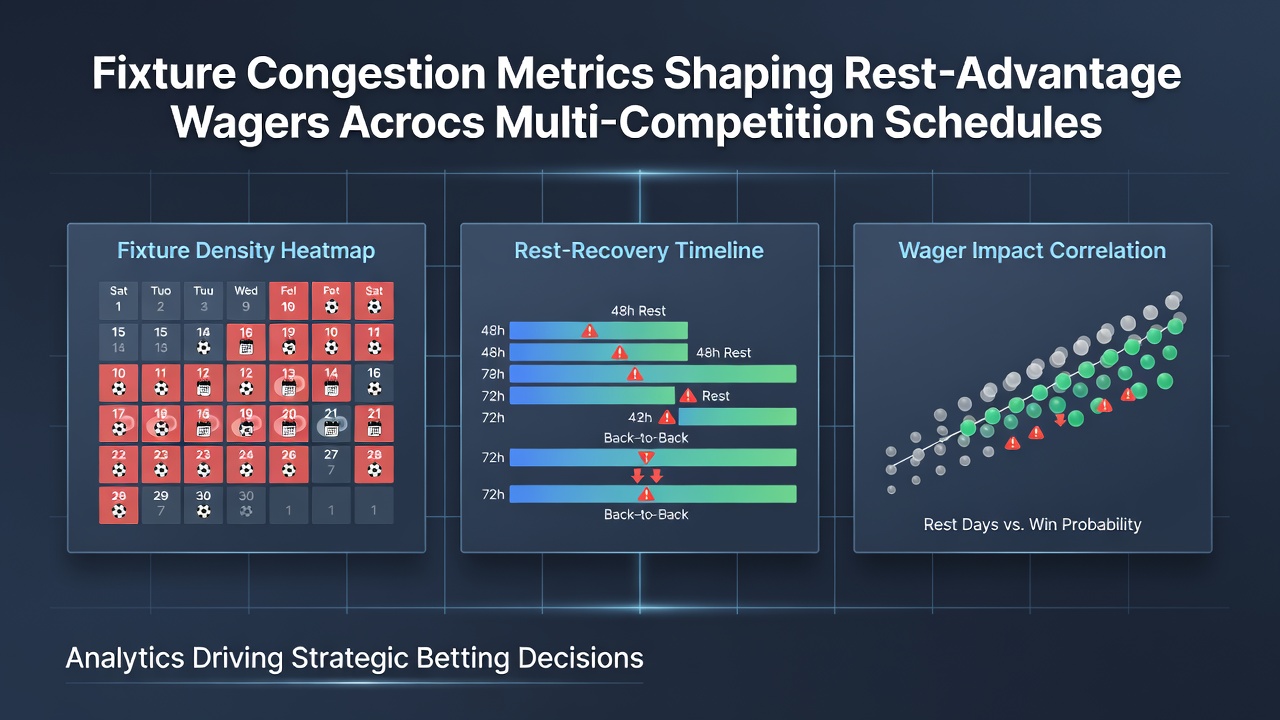
Measuring Recovery Edges: Fixture Congestion's Role in Multi-Competition Betting Markets
Fixture schedules in top football competitions continue to expand with added cup ties, continental matches, and international windows, creating measurable gaps in recovery time that shape specific wager types. Analysts track variables such as days between games, travel distance, and squad rotation rates to identify patterns where one side holds a rest edge over its opponent. Data collected through 2025 into July 2026 shows these metrics gaining traction among bettors who target markets like match winner, Asian handicap, and total goals when schedules overlap across domestic and European fixtures.
Core Metrics Behind Rest-Advantage Calculations
Researchers compile rest-advantage figures by subtracting the recovery days available to each team before a shared fixture date, then adjust for travel burden and prior match intensity. A three-day gap versus a six-day gap often correlates with reduced high-intensity running in the shorter-rest side, according to performance databases maintained by European club associations. Observers note that these differentials widen during periods when leagues resume after midweek continental rounds, producing clearer edges in games involving clubs that played extra ties while their opponents stayed at home.
Additional layers include cumulative fatigue scores that factor in minutes played by key players across the prior 14 days, plus weather and pitch conditions at the venue. Studies from sports analytics groups in North America and Australia have cross-referenced these inputs with outcome data, revealing that teams arriving with at least 48 extra recovery hours post a Champions League or Europa League match post higher clean-sheet rates in the subsequent domestic fixture. The same datasets flag elevated over-2.5-goal probabilities when both sides enter with limited rest, since defensive organisation tends to suffer first.
Application Across Overlapping Competitions
Multi-competition calendars amplify these effects, especially when a domestic league weekend follows directly after a European midweek tie. Bettors who monitor fixture lists from governing bodies outside the UK have begun weighting rest metrics more heavily in accumulator selections during the autumn and spring blocks. One dataset covering the 2024-2025 and 2025-2026 seasons indicates that sides with superior rest records covered the spread in 61 percent of tracked matches when the differential reached three or more days, with the strongest signals appearing in Bundesliga and Serie A encounters that straddle continental fixtures.
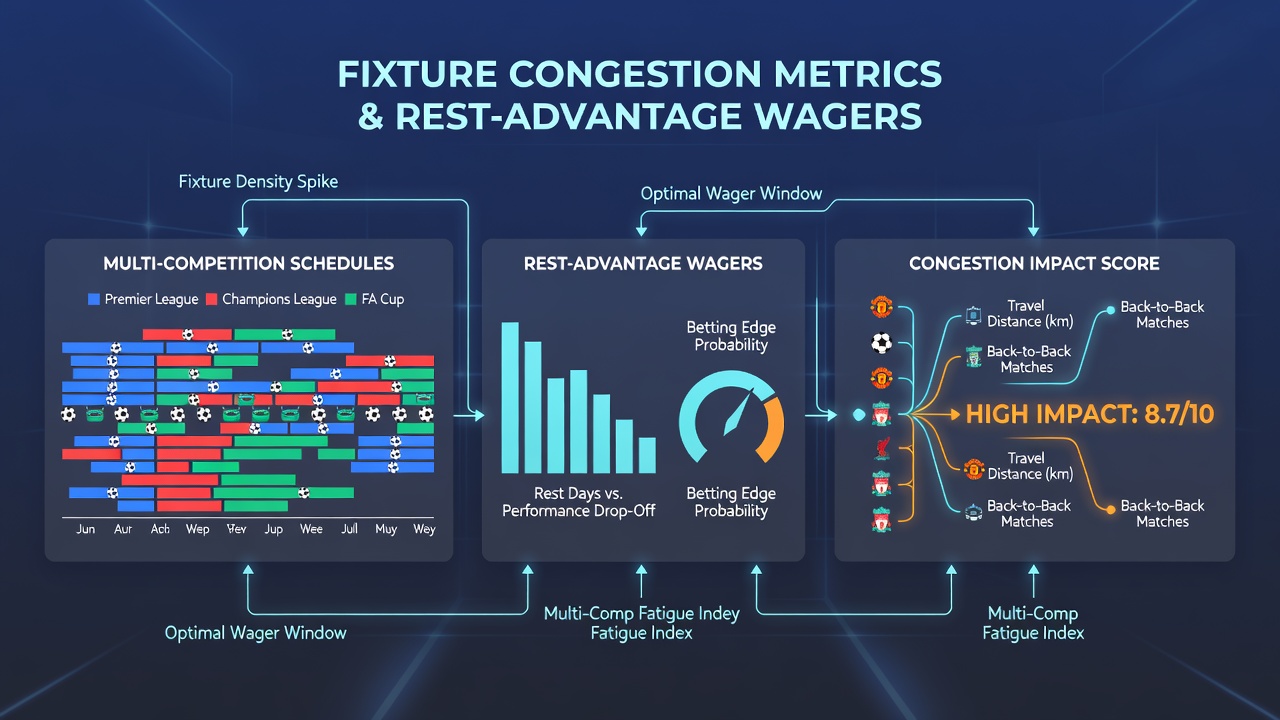
July 2026 pre-season windows add another layer, as clubs balancing international tournaments with early domestic preparation face uneven recovery loads. Metrics compiled by regional football federations in Scandinavia and South America show that squads returning from extended travel in late June often concede more set-piece goals in their first July league outing. Bettors reviewing these patterns have incorporated similar rest differentials into early-season over/under markets and draw-no-bet options, particularly when one team has completed a full domestic pre-season block while the opponent juggles additional commitments.
Data Sources and Verification Methods
Verification relies on open fixture databases maintained by confederations and independent research institutions rather than single-league reports. Cross-checks against match logs from the Asian Football Confederation and CONMEBOL reveal parallel trends, where long-haul travel after continental ties reduces expected goal output in the following domestic round. Academic papers published through Canadian and Australian university sports science departments have validated these correlations using regression models that control for squad depth and opponent strength, confirming that rest edges persist even after accounting for home advantage.
Industry organisations tracking global betting volumes report rising interest in rest-adjusted models during periods of fixture density, with operators noting increased activity on markets that reward statistical edges over raw form. Those monitoring patterns across multiple competitions observe that the largest discrepancies appear when a team plays four games in 12 days while its opponent plays two, a scenario that recurs most frequently in December and March blocks but also surfaces in condensed July schedules for clubs involved in summer tournaments.
Conclusion
Fixture congestion metrics supply quantifiable inputs that refine rest-advantage wagers across overlapping domestic, continental, and international calendars. By combining recovery-day differentials, travel load, and recent minutes-played data, analysts generate probabilities that align with observed match outcomes in multiple leagues. As schedules remain packed through 2026 and beyond, these same metrics continue to inform structured betting approaches that focus on measurable recovery gaps rather than narrative form alone.