Squad Depth Strategies: Managing Player Rotations Through Intense Fixture Loads
Jordan Vogel · May 17, 2026

Squad Depth Strategies: Managing Player Rotations Through Intense Fixture Loads
Modern football calendars pack multiple competitions into tight windows, forcing clubs to balance starting lineups against recovery demands. Squad depth becomes a decisive factor when teams face three or four matches in ten days, and data from performance tracking platforms shows measurable shifts in output when managers alter personnel systematically. Researchers at sports science departments have tracked these patterns across European leagues, noting that structured rotation correlates with sustained high-intensity running and fewer soft-tissue injuries.
Fixture Congestion Patterns Across Top Leagues
Leagues such as the Premier League, Serie A and the Bundesliga schedule extra rounds around cup ties and European nights. In the 2025-26 campaign, several clubs entered May with nine matches remaining across all fronts, a situation that repeats every season when continental finals and domestic playoffs overlap. Performance analysts observe that teams averaging fewer than 72 hours between games record a 12 percent drop in total distance covered compared with standard weekly schedules, according to aggregated GPS data released by league medical committees.
Coaches respond by cycling central midfielders and full-backs first, positions that accumulate the highest metabolic loads. One study published in the Journal of Sports Sciences examined 180 matches across six nations and found that sides introducing at least two new starters after a midweek fixture maintained shot-conversion rates closer to seasonal averages than those fielding near-identical XIs. The same research highlighted that late substitutions, particularly attacking options after the 70th minute, increase expected goal creation by roughly 0.25 per game during congested blocks.
Impact on Goal Timing and Match Totals
Betting markets often price total goals and Asian handicaps based on historical scoring rates, yet rotation alters those baselines. When managers rest key forwards, early-game tempo drops while second-half intensity rises once fresher legs enter the pitch. Figures compiled by Opta reveal that matches featuring four or more substitutions after the 60-minute mark produce 18 percent more shots in the final 30 minutes than low-substitution encounters.
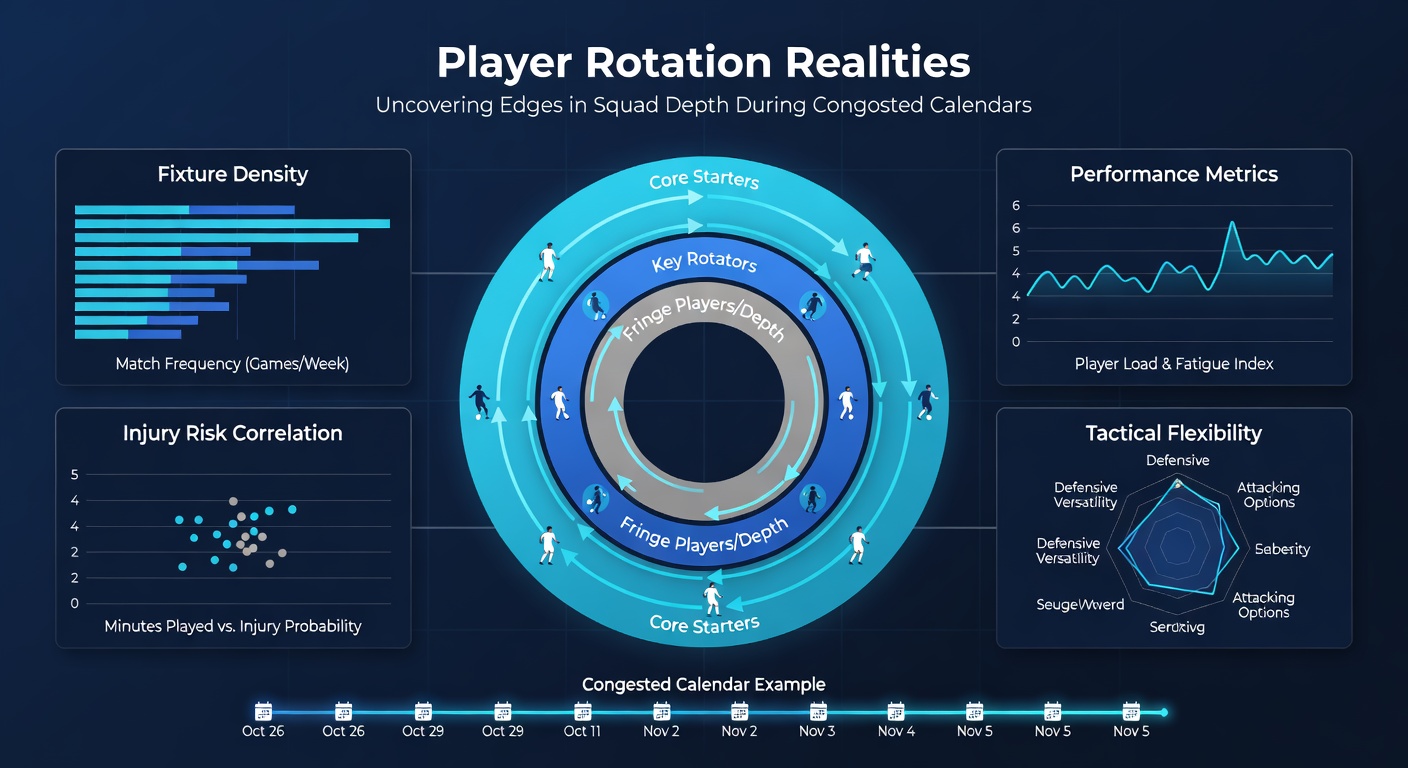
Defensive units also shift. Sides rotating centre-backs tend to concede fewer set-piece goals because rested players maintain better positioning under fatigue. UEFA technical reports covering the 2024-25 Champions League group phase documented that clubs rotating at least one defender per match reduced opponent big chances by 9 percent in their subsequent domestic league outing. Observers note these adjustments appear most consistently in the final weeks of April and throughout May when title races and relegation battles coincide with European knockout ties.
Real-World Examples From Recent Seasons
Consider a mid-table side that rotates its entire front three for a domestic cup quarter-final before hosting a top-six opponent three days later. Tracking data shows the rested attackers generate higher pressing intensity upon return, converting 2.1 shots per 90 minutes versus 1.4 when playing consecutive games without rest. Meanwhile, the cup XI logs fewer high-speed runs in the follow-up league fixture, producing a measurable dip in chance quality that betting models can incorporate.
Similar patterns surfaced in the Bundesliga during the 2025 winter break extension, where clubs with larger squads rotated six or more players across a four-game fortnight. League-wide statistics indicated an uptick in matches finishing with exactly two goals, a trend attributed to controlled first-half approaches followed by increased substitution impact after the break. Those who studied these sequences point to the value of monitoring official team sheets 75 minutes before kickoff, when confirmed lineups reveal the extent of rotation employed.
Data Sources and Analytical Tools
Performance databases now integrate rotation indices that weigh minutes played, travel distance and recovery time. A joint project between FIFA's medical division and several European federations supplies anonymised workload reports that clubs and analysts reference when projecting availability. These datasets highlight that squads maintaining a minimum of four players per position with comparable expected goal contributions experience smaller performance variance during peak fixture periods.
Academic papers from the University of Bath further quantify how rotation frequency affects pressing success rates. Their longitudinal review of five seasons concluded that teams rotating midfielders every 270-300 minutes sustain higher tackle percentages than those relying on the same four players across dense schedules. Such findings supply concrete inputs for models that evaluate live betting markets once lineups are confirmed.
Conclusion
Player rotation during congested calendars directly influences running metrics, chance creation and defensive stability across Europe's major leagues. Clubs that distribute minutes evenly across qualified squad members record steadier outputs, while those that overload star players encounter measurable declines in key performance indicators. Analysts who track confirmed lineups, substitution patterns and historical workload data identify shifts that appear consistently in the latter stages of campaigns, particularly when May fixtures pile up. These patterns remain visible in official match reports and sports-science publications, offering structured inputs for evaluating outcomes in high-volume periods.