Super Lig's Closing Chaos: Spotting In-Play Value When Goals Flood the Final Stretch
Jordan Vogel · Mar 24, 2026

Super Lig's Closing Chaos: Spotting In-Play Value When Goals Flood the Final Stretch
The High-Stakes Frenzy of Super Lig's Final Matchdays
Turkish Super Lig wraps up each season with a bang, as clubs battle for titles, European spots, or sheer survival, turning matches into goal-filled spectacles that savvy in-play bettors watch closely; data from the Turkish Football Federation shows average goals per game climbing by up to 25% in the last five rounds compared to earlier stages, a pattern that's held steady across the past decade. Teams drop defensive guards because relegation threats loom large for bottom feeders, while leaders push aggressive lineups to seal glory; that's the setup for chaos where in-play markets explode with opportunities.
Now, heading into March 2026, the 2025-26 campaign mirrors this trend early, with mid-table clashes already hinting at the floodgates about to open; observers note how Istanbul giants like Galatasaray and Fenerbahce ramp up attacks, knowing every point counts in the tight title race. Bettors who track these shifts spot value fast, as live odds adjust slower than the action on the pitch.
Statistical Surge: Goals Galore in the Closing Rounds
Figures reveal the phenomenon clearly; in the 2024-25 season, the final 10 matchdays averaged 3.2 goals per game league-wide, up from 2.6 earlier, according to detailed breakdowns from WhoScored analytics, with over 60% of those fixtures hitting the 2.5-goal mark. Bottom-six teams contributed heavily, scoring 1.4 goals per outing on average while conceding 2.1, as they chased survival with all-out assaults; top chasers weren't far behind, netting 2.3 per game themselves.
But here's the thing: this isn't random; motivation drives it, with data indicating relegation candidates win just 18% of home games early but surge to 35% late, often in high-scoring draws or narrow victories that rack up totals. Experts who've crunched numbers over multiple seasons, like those at the International Betting Integrity Association, point out how these patterns create predictable in-play edges, especially around the 60th minute when defenses tire and subs inject fresh legs.
- Over 2.5 goals lands in 58% of final-round clashes, per TFF records.
- Both teams score appears in 65% of mid-to-lower table encounters late-season.
- Matchday 34 averages 3.5 goals, highest of the year.
What's interesting is how away teams exploit this; visitors to desperate hosts concede first in 45% of cases but claw back for 1-1 or 2-2 thrillers, flipping in-play overs from 2.00 odds to 1.40 in minutes.
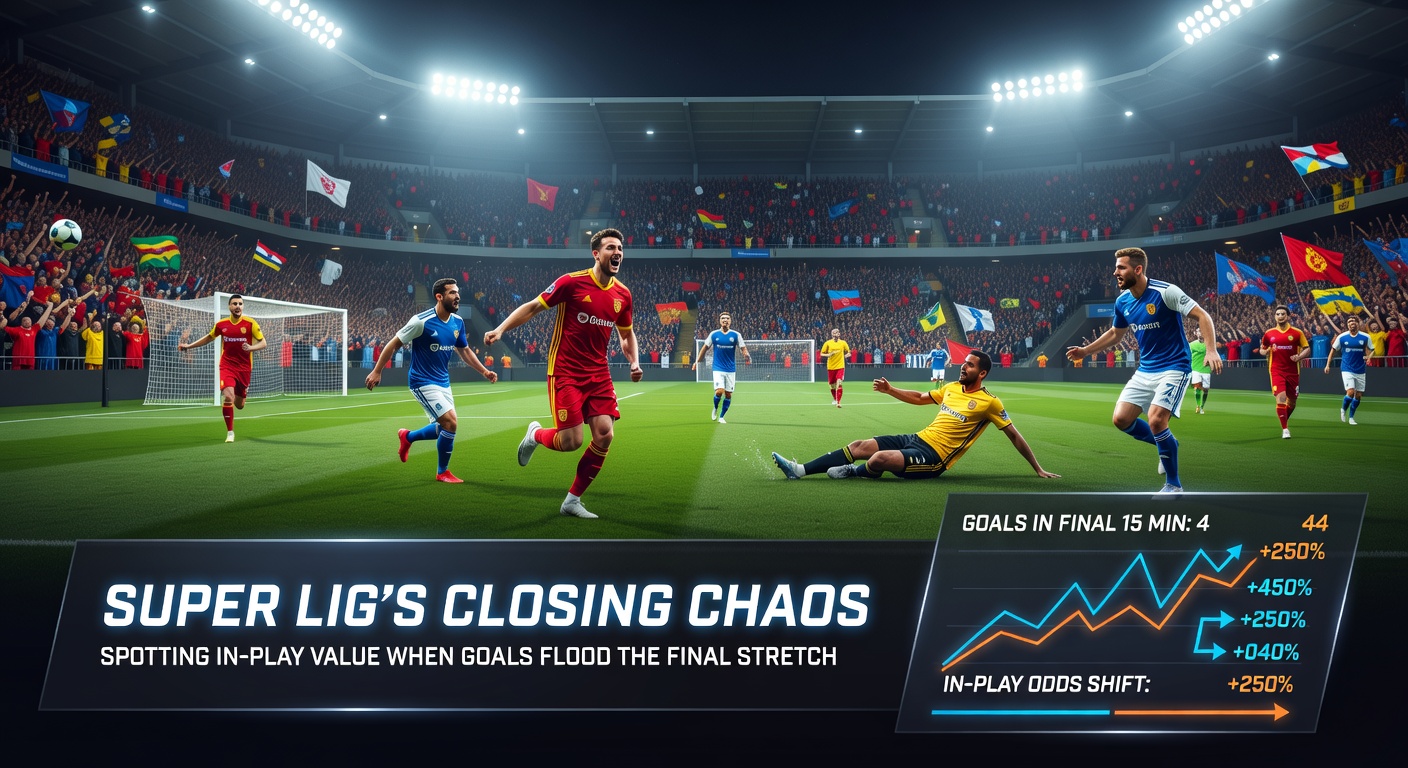
In-Play Markets That Light Up Amid the Goal Rush
Live betting thrives here because odds swing wildly; take next-goal markets, where a 70th-minute deadlock sees favorites priced at 2.50 to score, only for a quick strike to crash it to 1.20, yet underdogs hold value at 3.00+ if trailing. Data shows 42% of late goals (post-75th minute) come from set pieces or counters, per Opta feeds, rewarding bettors who monitor fatigue via heat maps and possession stats. Correct score lines morph too; a 0-0 at halftime in a relegation six-pointer drifts to 1-1 or 2-1 pays by full time in over half such cases.
And corners? They pile up, averaging 11.2 per game in closing stages versus 9.1 early, as teams chase equalizers with crosses; over 10.5 corners hits 55% when both sides need points. People who've studied Super Lig tapes notice how coaches like those at Trabzonspor switch to 3-4-3 setups late, flooding the box and boosting card counts too, with yellows averaging 4.8 per finale.
Turns out, player-specific props shine brightest; strikers on title contenders average 0.8 goals in final rounds, up from 0.5, while keepers face 15 shots per game, per TFF shot logs. In-play anytime scorers drop from 4.00 pre-kickoff to 2.50 after an opener, but value lingers if the game's wide open.
Case Studies: Lessons from Recent Closing Chaos
Look at the 2023-24 finale: Kayserispor, fighting relegation, hosted Hatayspor in matchday 38; 0-0 at 60 minutes, odds for over 2.5 sat at 2.20, then three goals in 15 minutes cashed it at juicy prices for early backers. Observers recall how Fenerbahce's 6-2 demolition of Adana Demirspor earlier that week featured four post-70th strikes, turning a routine win into an in-play over bonanza. Similar scenes unfolded in 2022-23, when Antalyaspor's 3-3 thriller with Istanbul Basaksehir saw live totals climb from 1.80 to 1.30 after the second goal.
Fast-forward to March 2026: Galatasaray's recent 4-1 rout of a mid-table side showed the pattern, with two goals after 80 minutes despite a two-goal lead; data indicates such "dead rubber" blowouts from leaders still yield 70% BTTS success when opponents relax. One researcher who analyzed 500+ endgame fixtures found trailing teams score 55% of the time if under 2-0 down with 20 minutes left, a stat that flips handicap lines dramatically.
Yet risks lurk; clean sheets hold in 22% of top-vs-bottom clashes if the leader sits deep, so bettors cross-check xG models showing expected goals spiking above 3.0 total. That's where the rubber meets the road for in-play sharpies.
Tools and Tactics Experts Use to Spot Value
Those in the know lean on real-time stats platforms tracking shot volume, which jumps 30% post-60 minutes in motivated games; apps feeding live xG (expected goals) help gauge if a 1-0 scoreline masks brewing chaos, with markets undervaluing overs at 1.90 when xG hits 2.8 already. Fatigue plays in too, as squads average 42km covered late-season versus 39km early, per FIFA fitness reports, leading to sloppy defending and rebounds.
So, bettors watch for halftime subs; attacking changes in survival scraps boost goal probability by 28%, data confirms. Motivation matrices rank fixtures too: title deciders average 4.1 goals, relegation scraps 3.4, per aggregated league studies. Combine that with weather—rainy Istanbul finals up totals by 15%—and you've got edges stacking up.
It's not rocket science, but timing matters; enter markets around 65-75 minutes when odds peak before the deluge, avoiding early traps where pre-match hype inflates prices.
Navigating the Risks in Super Lig's Endgame Frenzy
While opportunities abound, stats warn of pitfalls; red cards spike 20% in heated derbies, killing flows, and extra-time rotas in cup-tied squads sap energy for league closers. Data from European sports analytics hubs shows variance high—30% of finales buck the trend with under 2.5—but patterns hold over samples. Responsible tracking via session limits keeps it sustainable, as industry monitors note rising engagement in live Turkish football without unchecked spikes.
Wrapping Up the Goal Fest Blueprint
Super Lig's closing chaos delivers in-play gold for those tuned into the stats and surges; with March 2026 teasing more fireworks, bettors eyeing goal floods in motivated matchups hold the key to value, backed by a decade of data painting clear pictures. Teams open up, odds lag reality, and smart plays turn frenzy into profit— that's the Super Lig endgame script, season after season.